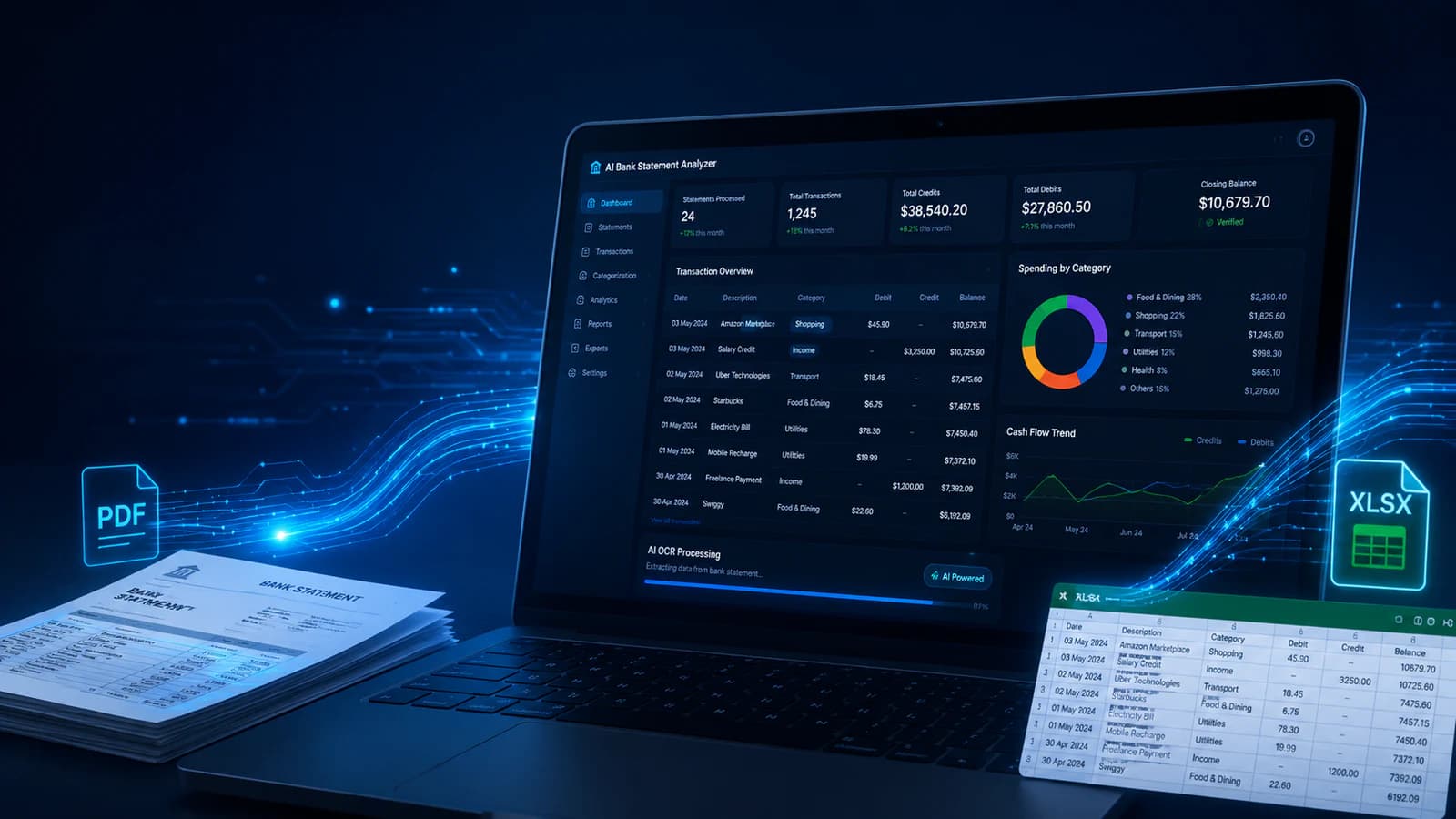
What is Bank Statement Analysis?
Bank Statement Analysis = systematic review of transactions to extract financial insights
Key entities: cash flow, transaction analysis, financial health, creditworthiness
Role: supports decision-making in lending, business management, and personal finance
Difference:
Analysis → insights & trends
Reconciliation → matching records & fixing errors
Importance: critical for fraud detection, budgeting, compliance, and financial planning
Enhanced by bank statement analyser tools, OCR, AI, and automation
Professional and business owners need financial information recorded in bank statements to have an idea of the business's financial behavior, cash flow, and overall financial health. This information is obtained using a process called bank statement analysis. In this analysis, an examination is conducted for deposits, withdrawals, transfers, balances, and transaction descriptions that are recorded in bank statements.
Employing this analysis, the user goes beyond record keeping and starts to identify patterns like recurring income, regular expenses, debt obligations, and unusual transactions. According to me, this process is not just a review of the past financial transactions, but it is about spotting financial trends useful for future decision-making.
Role in Financial Analysis and Decision-Making
Bank statement analysis makes it possible to view cash flow, which is the backbone of any financial system, as it is essential to know what money moves in and out of an account.
Modern bank statement analyser tools and bank statement analysis software make it possible to automate data extraction, transactions categorization, and pattern recognition using technologies like OCR, AI, and machine learning. This helps in avoiding manual effort and improves accuracy/
Difference Between Bank Statement Analysis and Bank Reconciliation
These two terms are often used together and have some differences between them as follows.
A bank statement analysis involves examination of the bank statement to understand financial behavior and the trend patterns of the underlying transactions. This analysis is mandatory when you need to know the cash flow pattern, are involved in fraud detection, or want to understand spending patterns.
On the other hand, bank reconciliation is a step within the broader analysis process. It ensures that transactions recorded in accounting systems are in accordance with the bank statement, and discrepancies such as missing entries, duplicate transactions, or timing differences in debit or credit entries are identified and corrected. As a result, a statement is prepared, and the balance of the bank account in the accounting record is matched with the balance in the bank statement.
Why Bank Statement Analysis is Important
Core importance: Enables financial health assessment and decision-making
Key functions:
Cash flow tracking and control
Fraud detection and anomaly identification
Creditworthiness evaluation for loan underwriting
Compliance role: Supports audits, tax reporting, KYC, AML
Industries: Banking, fintech, accounting, insurance, legal, business
Tools: Bank statement analyser and automation software improve speed, accuracy, and scalability
Bank statement analysis directly affects decision-making, risk management, and long-term financial stability of businesses.
Financial Health Assessment
The prime objective of the bank statement analysis is the assertion of the financial health by evaluating transaction history, account balances, and spending patterns. By performing this analysis, it becomes easier to assess whether the business has sufficient income, its expenses are controlled, and whether savings are growing or not.
An individual can easily detect any hidden spending habits, like small, frequent transactions, etc., which can significantly impact savings over time.
Cash Flow Visibility and Control
Cash flow is the lifeline of any business, and bank statement analysis enables users to view cash inflows and outflows. A company can exercise better control if they are able to timely identify peak income periods, able to foresee upcoming liabilities, and efficiently optimize working capital.
Fraud Detection and Anomaly Identification
An obvious benefit of the bank statement analysis is fraud detection. This is achieved by carefully reviewing transactions to detect unusual patterns such as unauthorized withdrawals with no clear explanation. Further, frequent small transfers or mismatched entries can be identified early to prevent any fraud.
Creditworthiness and Loan Underwriting
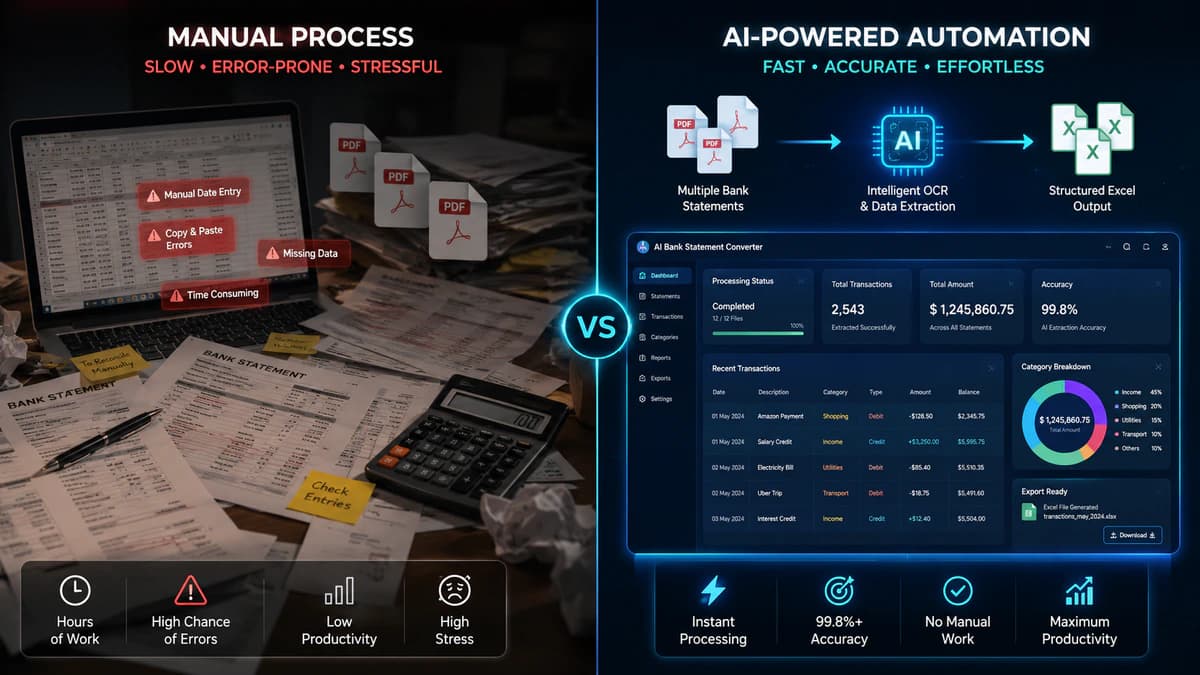
In lending and financial services, banks, NBFCs, and fintech companies rely on transaction analysis to evaluate whether an applicant can repay a loan. Such an analysis assesses these key factors, such as consistency of income, debt obligations, spending behavior, and account balance trends.
Compliance, Audit, and Tax Purposes
Regulatory compliance is another major reason why bank statement analysis is essential. Strict standards such as KYC (Know Your Customer) and AML (Anti-Money Laundering) are complied with diligently to avoid any future mishap.
In taxation, this analysis helps identify income sources, deductible expenses, and potential inconsistencies in tax filings.
Real-World Use Cases Across Industries
This analysis is widely used in multiple industries for specific purposes. In banking & financial services is helps in loan underwriting, risk assessment, and fraud detection. In fintech companies its used to achieve automated credit scoring and real-time transaction monitoring. In accounting & bookkeeping, to perform bank reconciliation, expense tracking, and financial reporting. Insurers use it for verifying income and detecting fraudulent claims, legal and litigation companies use it for analyzing financial records for disputes and investigations, and further businesses & enterprises use it for cash flow management, budgeting, and operational optimization.
Key Components of a Bank Statement
Core components: account details, statement period, transactions, balances, fees, descriptions
Transactions (credits/debits/transfers) are central to transaction analysis
Balances help measure cash flow and financial stability
Fees & descriptions reveal hidden costs and transaction context
All components together enable accurate bank reconciliation, fraud detection, and financial insights
Enhanced by bank statement analyser tools and automation software
In order to perform accurate bank statement analysis, it is essential to understand the structure and individual components of a bank statement. An account statement is not just a list of transactions, it reflects account activity, financial behavior, and potential risks. According to me, many errors in analysis are not due to complex data but due to the basic components that are misinterpreted.
Account Details and Statement Period
This is account meta information. It includes the account holder's name, account number, bank name, and the statement period's usually start and end dates.
Transactions (Description, Credits, Debits, Balances)
Transactions are the core and it comprises of description (details of this particular transaction like fee, profit, other account name etc. ), credits (deposits, which may be salary, business income, transfers, and interest earnings etc), debits (withdrawals, which normally are expenses, payments, EMIs, and subscriptions etc), and a running balance that is the result after adding or subtracting that particular credit or debit from the last transaction running balance.
Opening and Closing Balances
The opening and closing balances give us a picture of what is the result of all these transactions by giving us a starting financial position and then an ending position after all transactions.
Step-by-Step Process of Bank Statement Analysis
7-step workflow: collect → convert → categorize → analyze patterns → detect fraud → reconcile → report
Key processes: transaction analysis, categorization, pattern recognition, anomaly detection
Critical tools: OCR, AI, bank statement analyser, structured formats (Excel/CSV/QBO)
Core outcomes: accurate bank reconciliation, fraud detection, financial insights, reporting
Structured approach ensures accuracy, scalability, and better financial decision-making
A structured approach is required for accurate bank statement analysis. No matter what tool you use its all about careful analysis and involves following steps.
Step 1: Collect and Prepare Bank Statements
This process starts with gathering the required period's bank statement from the relevant bank. It is to be ensured that in these statements, there are no missing periods, complete transaction history, and statements from all relevant accounts.
Step 2: Convert Statements into Structured Formats (PDF to Excel/CSV/QBO)
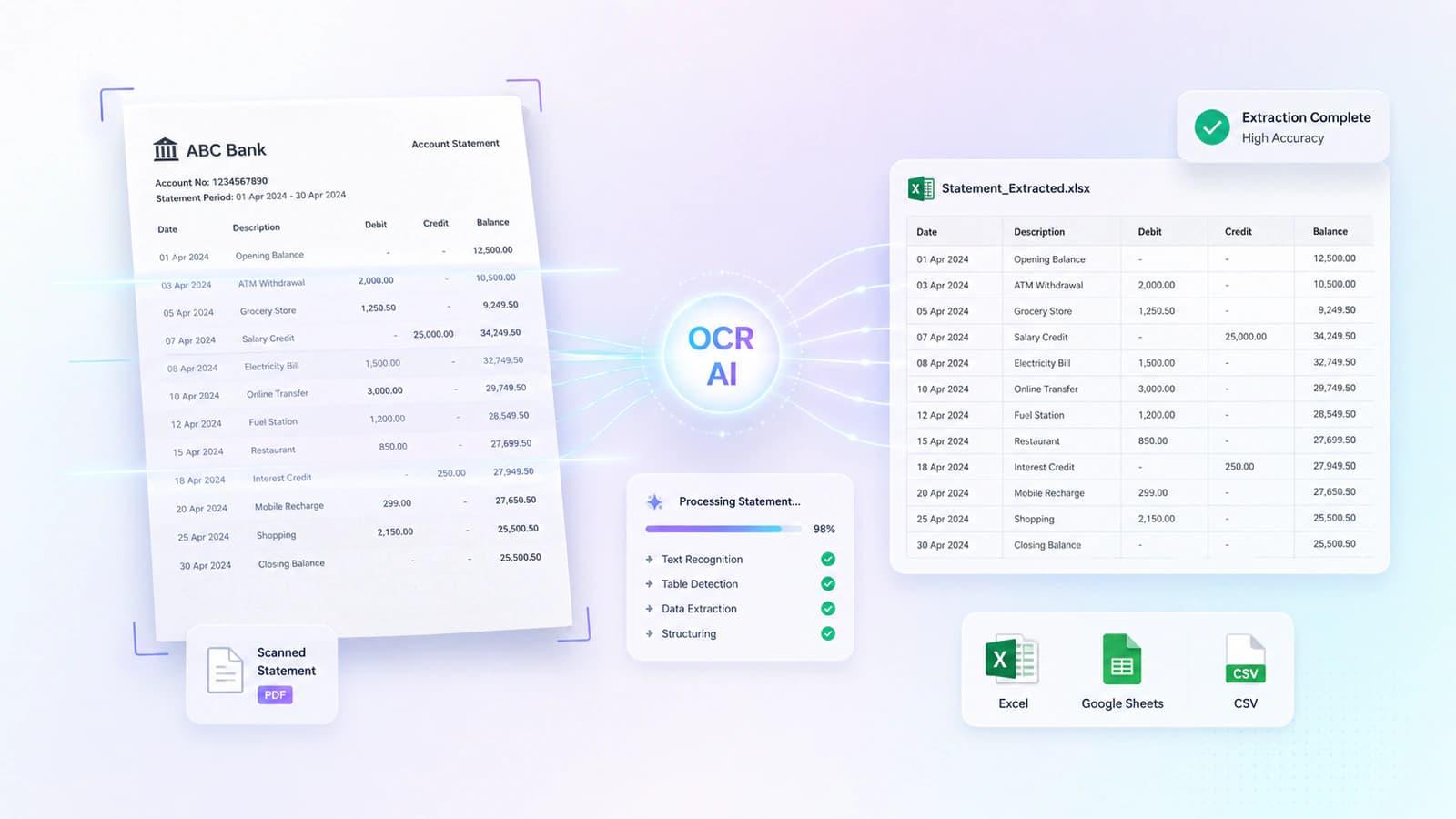
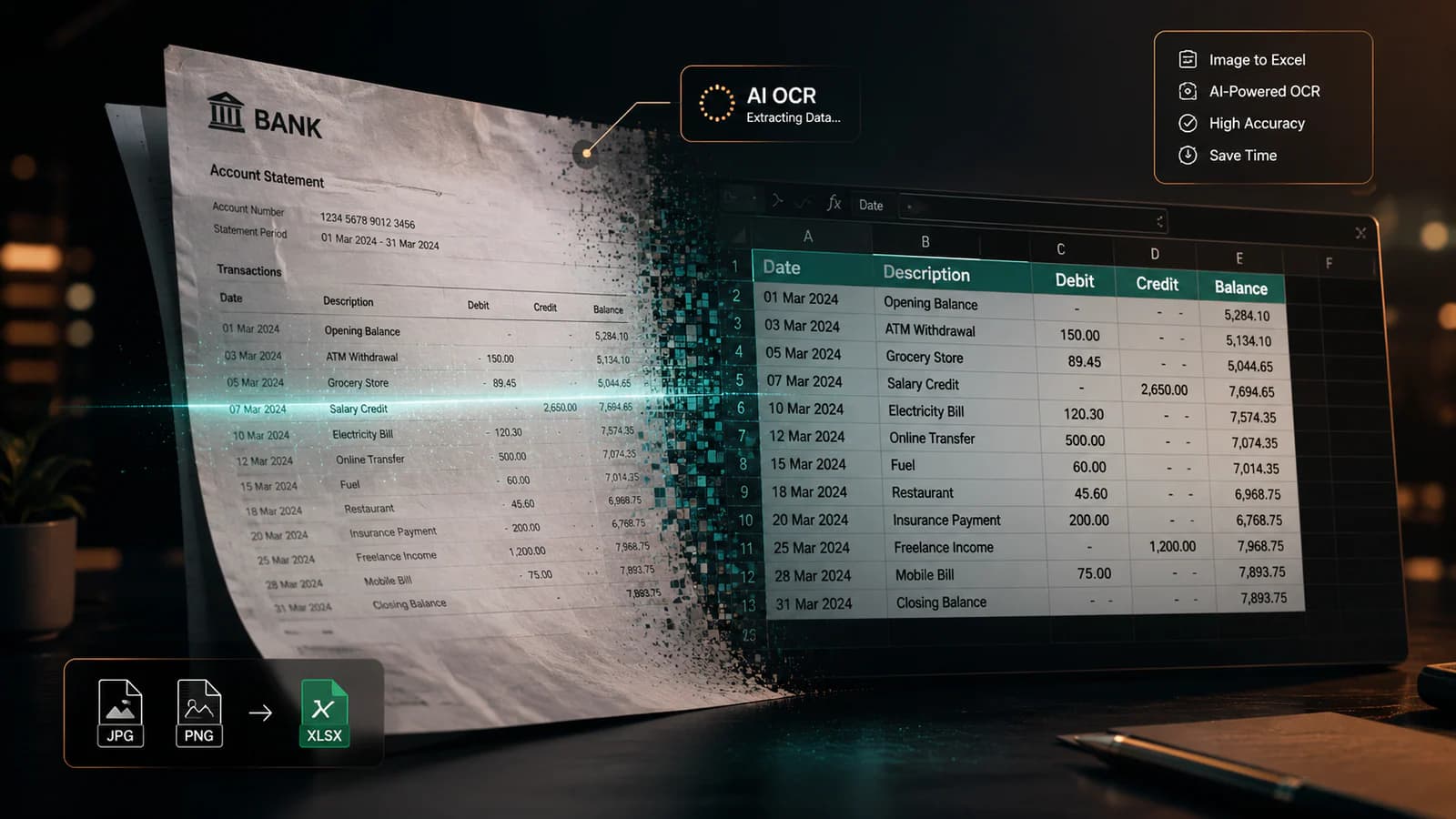
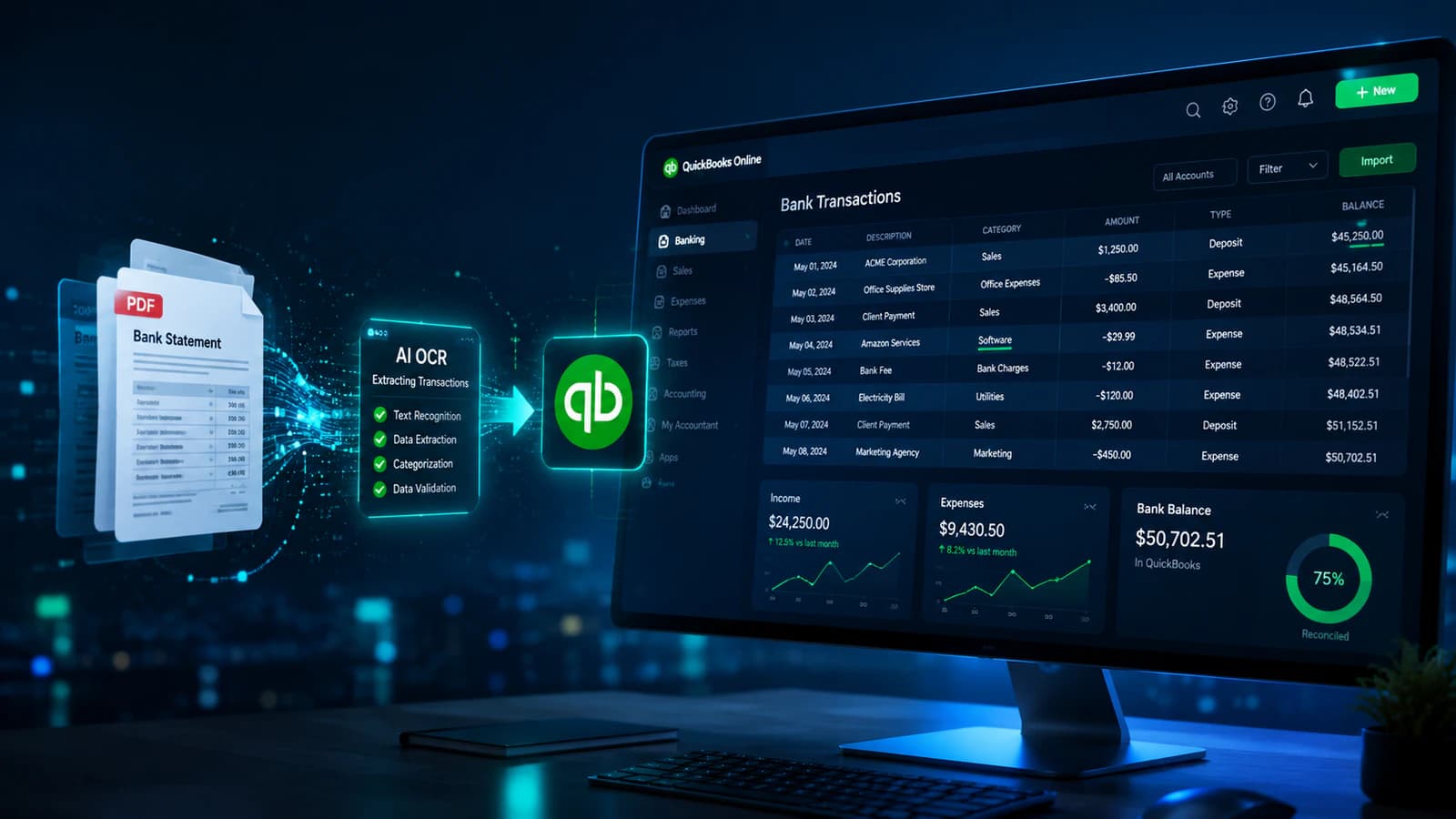
Most bank statements are typically in PDFs and scanned documents, and to perform effective analysis, these must be converted into structured formats like Excel, CSV, or QBO. This step enables the analyst to easily sort and filter transactions.
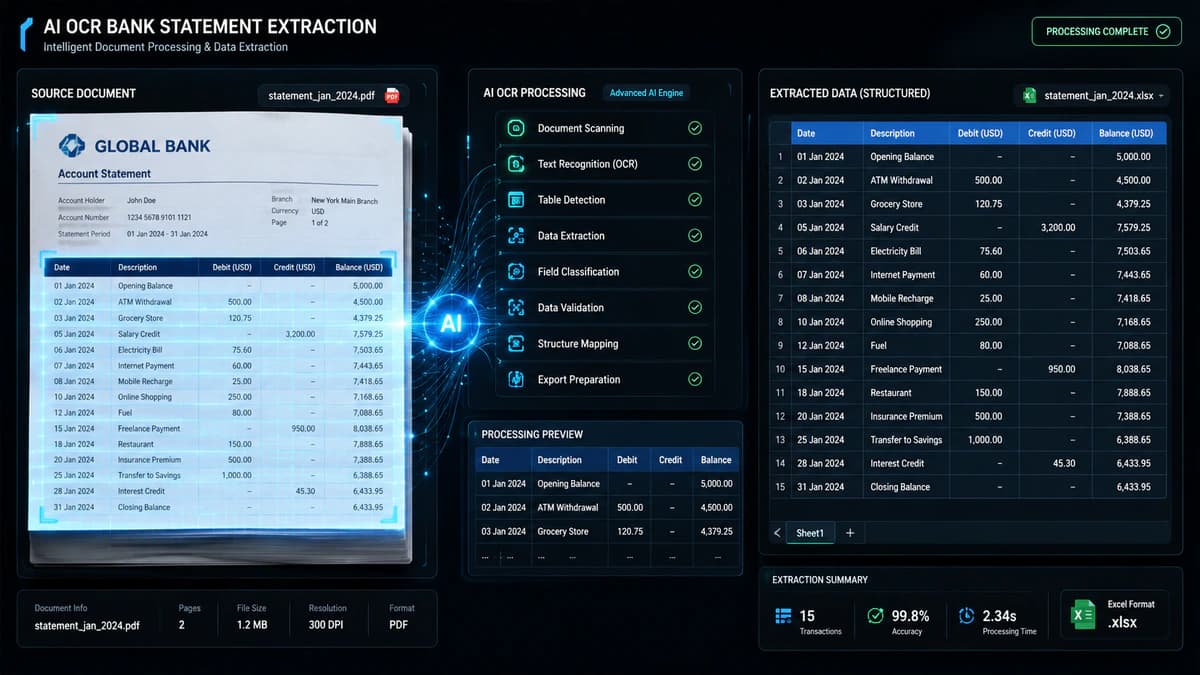
Step 3: Perform Transaction Analysis and Categorization
Once the data is structured, now begins the analysis stage. Each transaction is categorised into meaningful groups like income (salary, business revenue, interest), expenses (utilities, rent, vendor payments), and transfers (internal fund movements).
Step 4: Identify Patterns, Trends, and Recurring Transactions
As the categorization stage is done, our focus shifts to identifying patterns and trends. Here, various areas are checked, like monthly income consistency, recurring expenses (subscriptions, EMIs, payroll), seasonal cash flow variations, and growth or decline in account balances.
Step 5: Detect Red Flags and Fraud Indicators
As the areas are analysed, then red flags are marked where unusually large withdrawals, frequent small transfers to unknown accounts, duplicate transactions, a mismatch between reported income and actual deposits, etc.
Step 6: Perform Bank Reconciliation
At this stage, bank reconciliation is performed to ascertain that the bank record is consistent with the accounting record.
Step 7: Generate Insights and Financial Reports
After the whole of the above-stated process is done, a portion of the errors or inconsistencies is drafted as a result of this analysis. This final report includes cash flow summaries, expense breakdowns, income vs expenditure analysis, and risk/fraud pointed out.
Manual vs Automated Bank Statement Analysis
Manual analysis: spreadsheet-based (Excel, Google Sheets), flexible but limited
Limitations: human errors, time-consuming, poor scalability, weak fraud detection
Automation benefits: high accuracy, speed, scalability, AI categorization, integration
Decision factor:
Manual → small-scale, simple use cases
Automated → large-scale, complex, compliance-driven environments
Although choosing between a manual and an automated approach doesn't make much difference. But the execution of the approach affects the accuracy and efficiency of the results.
According to me, manual methods are for simple use cases, but for anything beyond basic analysis, automation is becoming the standard across industries.
Spreadsheet-Based Analysis (Excel, Google Sheets)
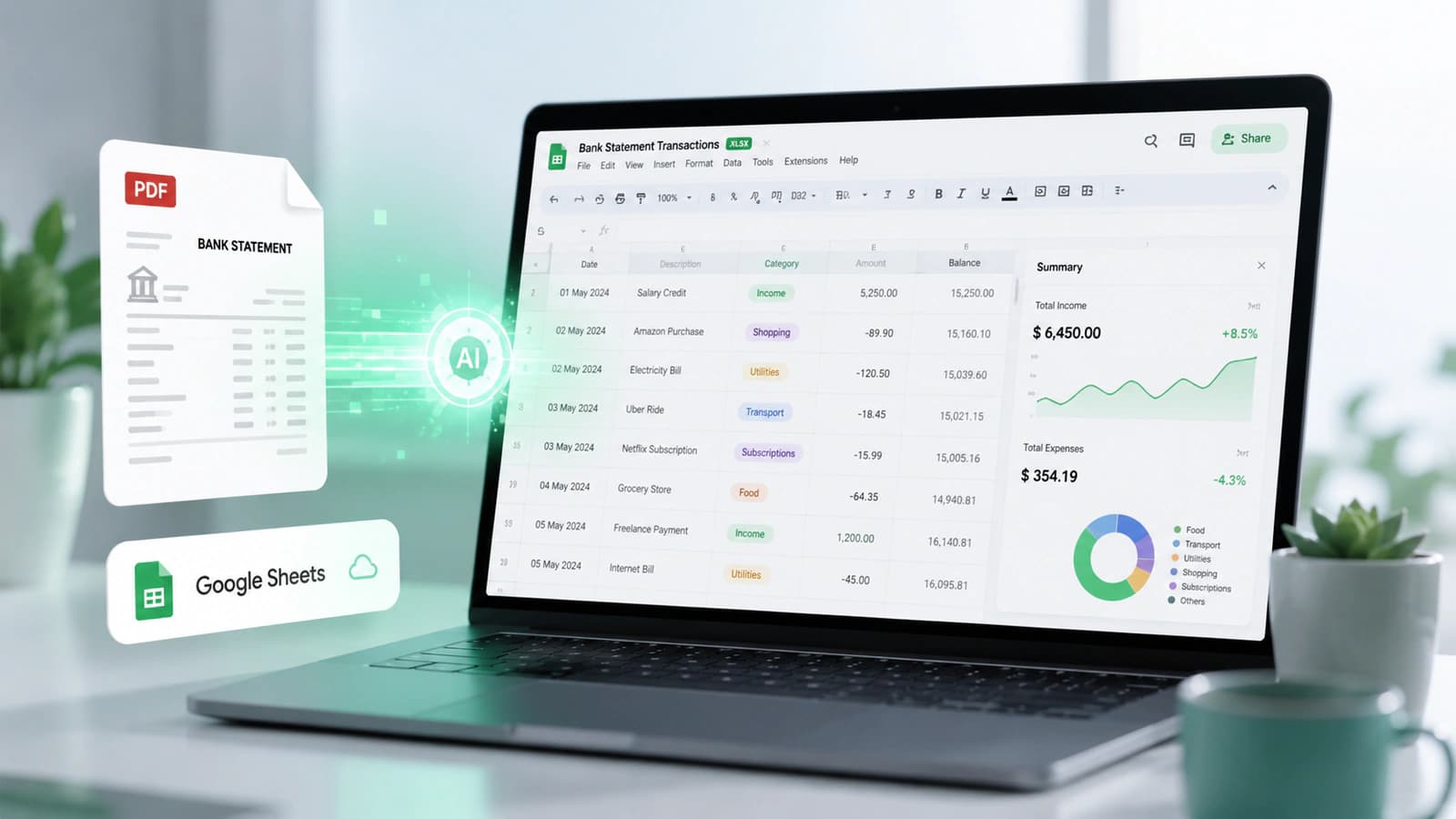
Traditionally, bank statement analysis has been performed using spreadsheet tools like Microsoft Excel, Google Sheets, or LibreOffice Calc. In this approach, transaction data is either manually entered or imported into spreadsheets and then analyzed using formulas, filters, and pivot tables. Spreadsheets allow users to categorize transactions manually, calculate income vs expenses, perform basic bank reconciliation, and create charts for financial trends.
Limitations of Manual Methods
Despite their flexibility, manual methods have some drawbacks. Manual data entry often leads to mistakes such as incorrect amounts, missing entries, or duplicate transactions. Processing large volumes of transactions manually can take hours or even days. Spreadsheets become slow and difficult to manage as data grows. Different bank formats make it difficult to maintain consistent templates.
Benefits of Automation (Accuracy, Scalability, Speed)
Automated bank statement analysis tools take advantage of technologies like OCR, AI, and machine learning. Harnessing these technologies provides clear benefits as follows. Automated systems reduce human errors and achieve accuracy levels often exceeding 95-99%. Tasks can be completed in minutes. Tools can handle large volumes of transactions across multiple accounts. AI can classify transactions into meaningful categories without manual input. Advanced algorithms and machine learning can identify anomalies and suspicious patterns in real time. These tools provide seamless connection with accounting software (QuickBooks, Xero) and ERP systems.
When to Choose Each Approach
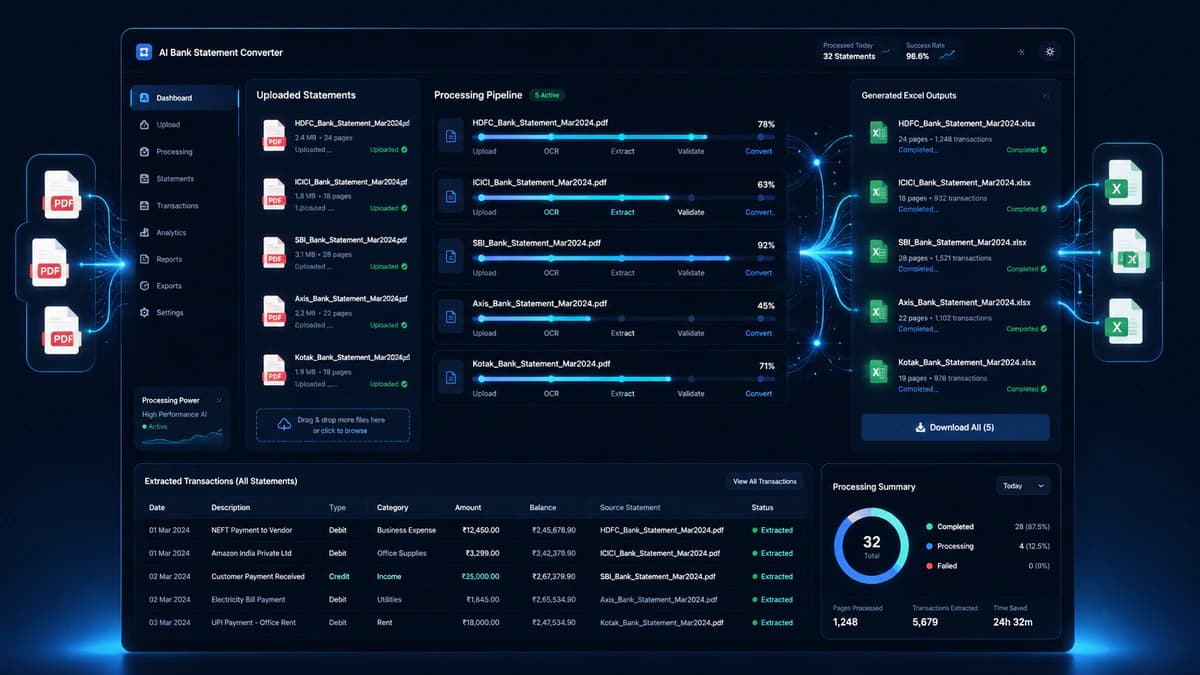
But the trade-off between each approach requires some prerequisites. Choose manual (Spreadsheets). When transaction volume is low, budget constraints are strict and basic analy sis is sufficient. Similarly, choose Automated (AI-Powered Tools) when handling large or complex datasets, accuracy and compliance are critical, fraud detection and risk assessment are priorities, and further where integration with accounting or ERP systems is needed. In modern environments, most businesses and financial institutions are shifting toward automation due to its efficiency and reliability.
Common Challenges in Bank Statement Analysis
Key challenges:
High transaction volume
Inconsistent formats
Data extraction errors
Fraud detection complexity
Integration and compliance issues
Manual methods struggle with scale and accuracy
Solutions involve automation, OCR, AI, and standardized workflows
Overcoming these challenges is essential for accurate bank statement analysis and reconciliation
Despite clear advancements in technology, bank statement analysis still struggles with some challenges that may impact accuracy, efficiency, and reliability. According to me, most organizations struggle not because of a lack of tools, but because they underestimate the complexity of financial data. The biggest challenges in this journey are:
High Transaction Volume
In the case of businesses, fintech platforms, and financial institutions, there is always a large volume of data. Manually reviewing thousands of entries increases processing time, raises the risk of errors, and makes real-time analysis nearly impossible. This is the main reason why automated bank statement analysis software is adopted.
Inconsistent Formats
Many banks have their own formats of bank statements. These have different layouts, file formats, and tabular structures. This lack of standardization creates challenges in data extraction and analysis. For example, different column structures, varying transaction descriptions, and multiple currencies and formats make it difficult for tools to marmalise and consolidate data.
Data Extraction Errors
Due to the diverse nature of the bank statements, especially scanned or low-quality documents, is another big challenge. Common issues in this domain are misread characters in OCR, missing transaction fields, and incorrect formatting of dates or amounts. Further column positions may be switched as well.
Fraud Detection Complexity
Detecting fraud is not always straightforward. Here, the challenges are identifying small but frequent suspicious transactions, detecting pattern-based fraud, and differentiating between legitimate and suspicious behavior.
Integration and Compliance Issues
It is a great challenge to properly format extracted data from different banks to align with multiple systems such as accounting software, ERP platforms, and CRM tools. Sticking to this data flow across these systems is quite complex.
Further, organizations must comply with regulatory requirements such as KYC (Know Your Customer), AML (Anti-Money Laundering), and Financial reporting standards. It's a challenge to maintain this compliance, or else lead to legal risks and penalties.
Best Practices for Effective Bank Statement Analysis
Best practices include:
Standardized transaction categorization
Regular review cycles
Use of automation tools (OCR, AI, ML)
Cross-verification via bank reconciliation
Compliance with KYC, AML, and financial regulations
Ensures accuracy, consistency, fraud prevention, and regulatory compliance
Automation tools significantly enhance efficiency and scalability
Effective analysis is not just following the steps as we described above in our post. It requires a disciplined approach, consistent methodology, and the right combination of tools and processes. All these have to be applied correctly to get the anticipated results. According to me, the difference between basic analysis and high-quality financial intelligence is in the adoption of best practices and their consistent application over time.
Standardized Categorization
One of the most important best practices is maintaining a standardized approach to transaction categorization. Every transaction, whether income, expense, or transfer, should be classified consistently across all accounts and time periods. Without standardization, financial reports become inconsistent, trend analysis becomes unreliable, and comparisons across months or departments become difficult.
Regular Review Cycles
Bank statement analysis should not be a one-time activity. Establishing regular review cycles, monthly, quarterly, or even weekly, for high-volume businesses, is essential. Regular reviews help detect discrepancies early, monitor cash flow trends continuously, and identify fraud or anomalies before they escalate.
Use of Automation Tools
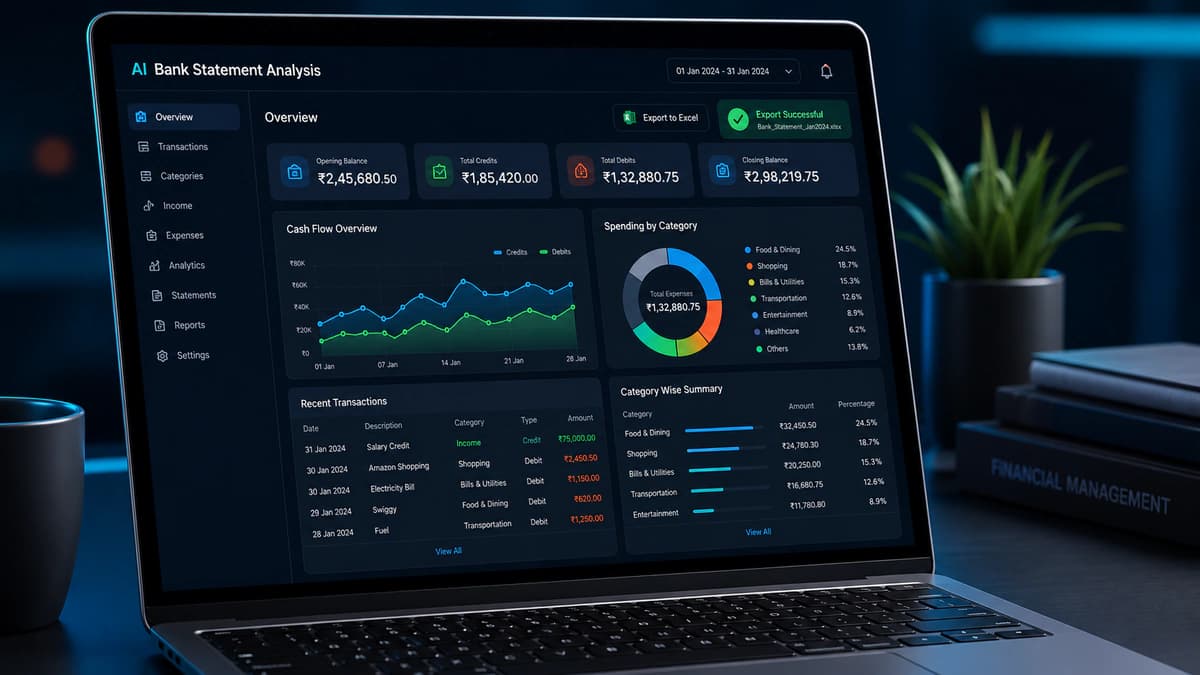
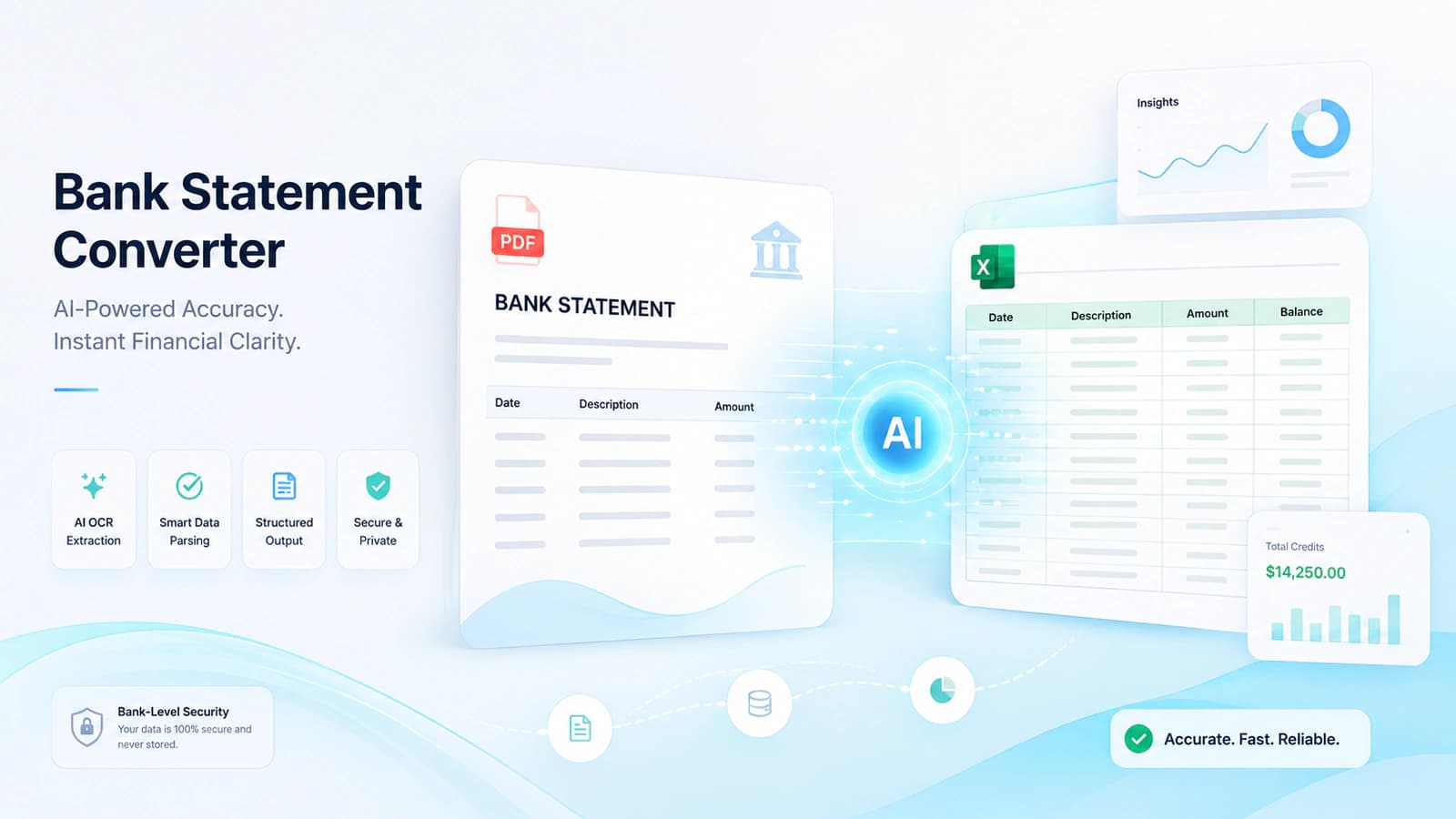
Automation is no longer optional now it is best practice for modern financial analysis. Using a bank statement analyser or bank statement analysis software significantly enhances efficiency and accuracy. Automation enables faster data extraction using OCR, real-time transaction categorization using AI and ML, automated bank reconciliation, and instant generation of financial reports.
Compliance with Financial Regulations
Compliance is a non-negotiable in the case of bank statement analysis, especially for businesses and financial institutions. Regulatory frameworks such as KYC (Know Your Customer), AML (Anti-Money Laundering), and financial reporting standards require accurate and transparent financial data. Best practices include maintaining audit trails, ensuring data security and encryption, regular compliance checks, and documenting financial processes.
Frequently Asked Questions (FAQs)
What is bank statement analysis?
Bank statement analysis is the process of reviewing and interpreting transactions in a bank statement to understand financial behavior, cash flow, and overall financial health. It involves transaction analysis, categorization, and identifying patterns or anomalies.
How to analyze bank statements step by step?
The process typically includes collecting statements, converting them into structured formats (Excel/CSV), categorizing transactions, identifying patterns, detecting anomalies, performing bank reconciliation, and generating financial insights.
What is a bank statement analyser?
A bank statement analyser is a tool or software that automates the extraction, categorization, and analysis of bank statement data using technologies like OCR, AI, and machine learning.
What is bank reconciliation?
Bank reconciliation is the process of matching bank statement transactions with internal accounting records to ensure accuracy and identify discrepancies such as missing or duplicate entries.
What is the format of a bank reconciliation statement?
A bank reconciliation statement typically includes the opening balance, additions (such as outstanding deposits), deductions (such as outstanding cheques and bank charges), and the adjusted closing balance that matches accounting records.
Which is the best bank statement analysis software?
The best software depends on your needs, but popular options include tools like DocuClipper, Nanonets, HyperVerge, and Docsumo. These platforms offer features such as OCR extraction, AI-based categorization, fraud detection, and integration with accounting systems.
Final Thoughts
Now, bank statement analysis is not just an official task of processing data. It is a strategic function that brings financial clarity, risk management, and informed decision-making. Employing this approach, users are able to understand cash flow and detect fraud before these get escalated.
Throughout this guide, we explored how transaction analysis, bank reconciliation, and modern bank statement analyser tools work together to deliver accurate and actionable insights. We also examined how bank statement analysis softwares harness the power of modern technologies like OCR combined with AI and machine learning to transform traditional workflows into efficient, automated systems.
According to me, the real advantage lies in combining structured processes with the right technology. Businesses that adopt automation not only save time but also improve their financial decision-making.
Hope you enjoyed this guide!
Conversation0 Comments
Write a comment ↓Leave a Reply
Your email address will not be published. Required fields are marked *
Login Required
Please sign in to join the conversation.